The Keepsake Is Not the Memory
A keepsake is not the memory itself. Learn to read an object’s material history separately from the changing stories it gathers over time.
What does a keepsake actually preserve? A keepsake preserves a material trace of the past, while the memory attached to it may shift as people retell, question or inherit the story. Keeping those two histories distinct can make an object more meaningful, not less.
Read the object and its story as separate things
A chipped mug can show where its glaze has worn away, whether its handle was repaired and how often it may have been used. It cannot, by itself, establish who drank from it or what they were thinking. Those details belong to the accounts people give, and accounts can differ without the mug becoming less real.
This distinction is useful whenever an object carries family, community or personal significance. Its material history includes things you can observe: construction, wear, repairs, inscriptions and changes in ownership. Its remembered history includes what people say it means, which occasions they connect it to and what has been forgotten or added in telling.
Neither history has to defeat the other. A relative may remember a ring as a gift from one person, while a note tucked into its box names another. The ring and the note are evidence of their own existence; deciding how they fit together calls for curiosity rather than an instant verdict.
Choose an approach that fits your situation
If you are sorting your own belongings, begin with what you know directly. Write a short note about where the item came from, what you remember using it for and which details are uncertain. That makes room for later changes without making your present account sound like a permanent record.
If you are caring for something inherited, preserve known information alongside the object rather than writing a single polished story as though every detail were settled. A name, a place and the source of a particular claim can be more useful than a dramatic account with missing links. If relatives remember it differently, record the difference respectfully.
If the object belongs to a group or community, ask who has standing to explain its significance before you display, label or circulate it. A personal interpretation may not represent everyone connected to it. The right fit is to seek context from people with relevant knowledge and to accept that some stories are not yours to make public.
If you are deciding whether to keep or pass an object on, separate attachment from obligation. You can value the story without retaining every physical thing; you can also keep an object while admitting that its story is incomplete. A short, honest account can travel with it if you choose to give it to someone else.
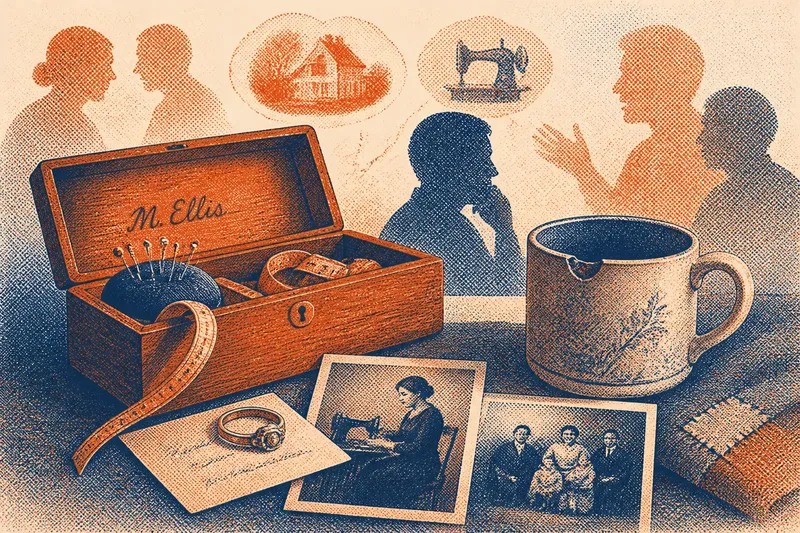
Say you inherit a wooden sewing box with a family story that it belonged to your great-aunt. You notice a later repair and find a name written inside, but no one can say who made the repair. You might record the family account, describe the visible mark and label the repair’s maker as unknown; the next person receives both the memory and its limits rather than a guess presented as fact.
Notice what the material record can and cannot tell you
Materials invite close attention, but they do not speak in complete sentences. Faded fabric, a replaced clasp or a polished patch may point to use, handling or repair. Several explanations may fit the same mark, so describe what you can see before interpreting why it happened.
Labels and inscriptions can help, but they also have histories. A date might refer to a wedding, a purchase or the moment someone later chose to mark the object. Compare the wording with letters, photographs or other records if they are available, and keep the difference between a confirmed detail and a plausible reading clear.
Care can alter an object too. Cleaning may remove grime while also disturbing a surface that carries signs of age or use. For fragile, valuable or culturally significant items, ask an appropriate conservator or knowledgeable custodian before attempting treatment; routine household cleaning is not always harmless.
How should you record a keepsake’s story?
What should you write on a keepsake label?
Record the object’s name, any known owner or maker, and how you learned those details. Mark uncertainty plainly, using wording such as “family account” or “maker unknown” rather than turning a possibility into a fact.
What if relatives remember the object differently?
Note the different accounts with their sources instead of choosing one simply because it sounds tidier. A disagreement can reveal how memories were passed along and may itself become part of the object’s history.
Should you repair a sentimental object?
Consider what the repair would change, what materials are involved and whether the object has particular cultural or historical importance. For delicate or significant pieces, seek suitable conservation advice before altering them.
Is a photograph enough to preserve a keepsake’s story?
A photograph can show appearance and condition at a particular moment, but it cannot preserve every account or explain why someone kept the object. Pair an image with a brief note about what is known, who supplied the story and what remains uncertain.
Keep the account open without making it vague
Good records are specific about both knowledge and gaps. Instead of writing “this was always treasured”, say who told you that, or describe the occasions on which you remember seeing it used. Concrete details give another reader something to consider without pretending that one person speaks for everyone.
It is not worth the effort to invent a complete story for every unexplained scratch or missing label. Speculation can crowd out useful observations and put words in the mouths of people who are no longer available to answer. “Unknown” is a meaningful entry, not a failure of care.
If you share an account, ask whether anyone named in it would prefer privacy, especially when the story touches on grief, conflict or a living person’s identity. A keepsake can be important without being put on public display. Respect for the people connected to an object is part of looking after its story.
A keepsake is not a sealed container for memory; it is a material object that people meet at different points in their lives. Describe what remains visible, say where the story came from and leave room for others to add or correct it. That is a thoughtful way to keep the keepsake’s memory in view without claiming that the object holds it unchanged.